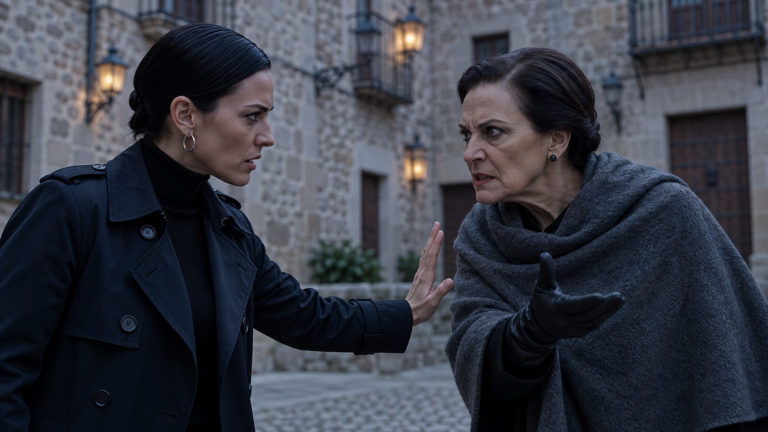
Two days later, Claire’s response arrived through Elise.
She claimed I had given verbal permission during a studio visit and later forgotten or regretted it because of grief.
The authorization page, she said, reflected that permission.
She described herself as a professional who had saved an unstable artist from financial failure.
She mentioned the slap several times.
Reading her words, I felt the room narrow around me.
It was not enough that she had taken the painting.
She had written a version of me in which my refusal could be dismissed as confusion.
Elise asked whether anyone else had been present at the visit Claire described.
“No.”
“Then we focus on the records we can establish.”
I spent that night searching old messages.
There was one conversation I remembered but could not immediately find.
Claire had asked about a collector interested in the portrait. I had refused, and she had replied with a voice message.
I scrolled through weeks of gallery photographs, opening times, delivery arrangements, and reminders about invoices.
Finally, I found it.
My written response said:
“The portrait is not for sale, now or later. Please stop offering it.”
Her recording began with an audible sigh.
“Fine, Julien. I understand. I will tell him it is unavailable.”
The recording was dated the morning after the supposed verbal authorization.
I sent it to Elise and then sat very still.
It was the first piece of evidence that felt stronger than my own insistence.
Even so, relief did not arrive cleanly.
It came tangled with the sound of someone I trusted acknowledging a boundary she would soon ignore.