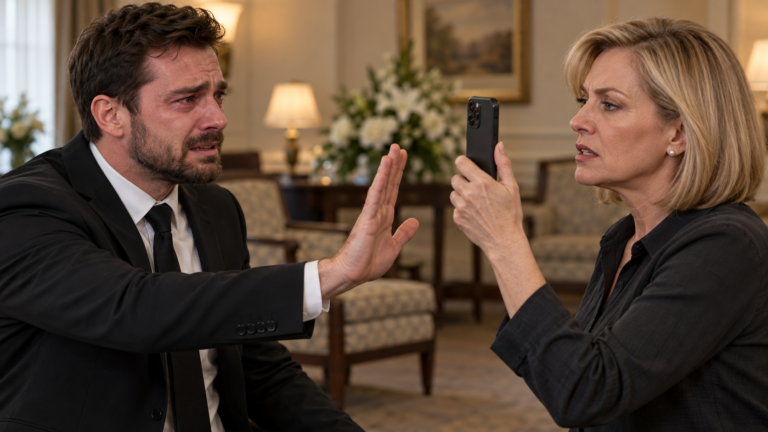
The months that followed were difficult.
Kayla sought advice about ending the marriage, separated her day to day finances, and found a small apartment close to work.
Owen protested every step.
Then he asked what he could do to make her trust him again.
She told him the truth.
“I don’t know that you can.”
He wanted a task he could complete and present as proof.
Flowers.
Appointments.
A payment toward correcting the tattoo.
But trust was not something she owed him once he had spent enough.
Their separation moved forward. Owen agreed to contribute toward the costs arising from what he had done, and the arrangements were recorded clearly.
Kayla did not post the story online.
She told the people who needed to understand why she was leaving.
When Owen described the breakup as her overreacting to a tattoo, she corrected him.
“He changed the design without my permission.”
That sentence was sufficient.
Some people understood immediately.
Others needed time.
She stopped managing their reactions.
After the tattoo had healed, she explored correction options with qualified professionals. She chose a plan carefully, accepting that it would take time and might not produce an instant, perfect result.
For once, waiting felt like an exercise of control rather than something imposed on her.
One Saturday, Miriam helped her hang a mirror in the new apartment.
Kayla caught sight of her left arm.
The name was still visible.
But so was the rest of her.
Her face looked less tired.
Her shoulders were relaxed.
On the counter sat groceries she had chosen, beside a calendar filled with plans nobody had approved for her.
She had once imagined the word “Enough” would remind her of a lesson she was beginning to learn.
Instead, she had learned it through something far more painful.
Consent did not become optional inside a marriage. Being trusted with access did not mean being granted authority. A partner who knew her answer would be no had no right to arrange the world so that she discovered his decision only after it became permanent.
She could regret what happened without blaming herself for expecting honesty.
She could pursue a correction without accepting his idea of what would make it beautiful.
And she could leave without first persuading him that leaving was justified.
Miriam stood back from the mirror.
“Straight?”
Kayla tilted her head.
“A little to the left.”
They adjusted it together.
This time, when Kayla said it was right, everyone listened.